
Long-Form Podcasts Turned into Daily YouTube Shorts
Podcast Clipping for Eric Siu's Marketing School & Leveling Up: A Daily Shorts Engine
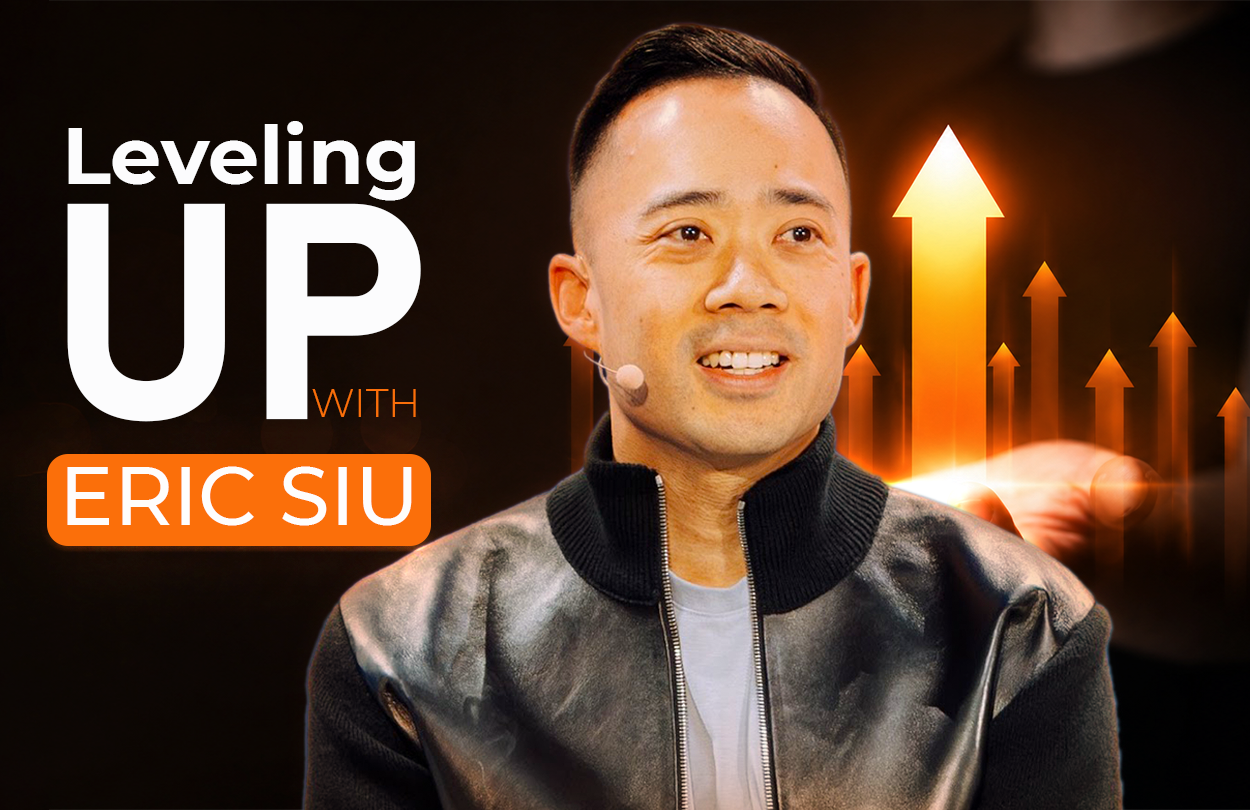
Eric Siu, Marketing School & Leveling Up
Podcast / Digital Media
Ongoing
Podcast Clipping & Short Video Editing
About Project
This podcast clipping case study covers how Beyond Bracket turns Eric Siu’s long-form podcasts into a daily stream of captioned YouTube Shorts for the Marketing School and Leveling Up channels. Eric Siu is one of the most recognized names in digital marketing – founder of Single Grain and co-host of Marketing School, the daily show he runs with Neil Patel, alongside his own podcast, Leveling Up. Between them, his long-form content has crossed 100 million downloads.
Beyond Bracket provides the podcast clipping service behind both channels. Our team works through each episode, finds the highest-potential moments, and edits them into vertical, caption-ready Shorts chosen and cut by editors who follow the subject matter, not an auto-generated batch. Every hour-long episode is full of standalone moments most of the audience never sees, and clipping them is exactly the kind of repeatable growth system Eric calls the “clip economy.”
Project Highlights:
- Podcast clipping for two established YouTube channels: Marketing School and Leveling Up
- Long-form episodes mined for their strongest 30-to-60-second moments
- Vertical clips hand-edited for YouTube Shorts with burned-in captions and fast hooks
- Consistent, high-volume output to feed a daily Shorts publishing cadence
- Editing style matched to each channel's existing brand and pacing
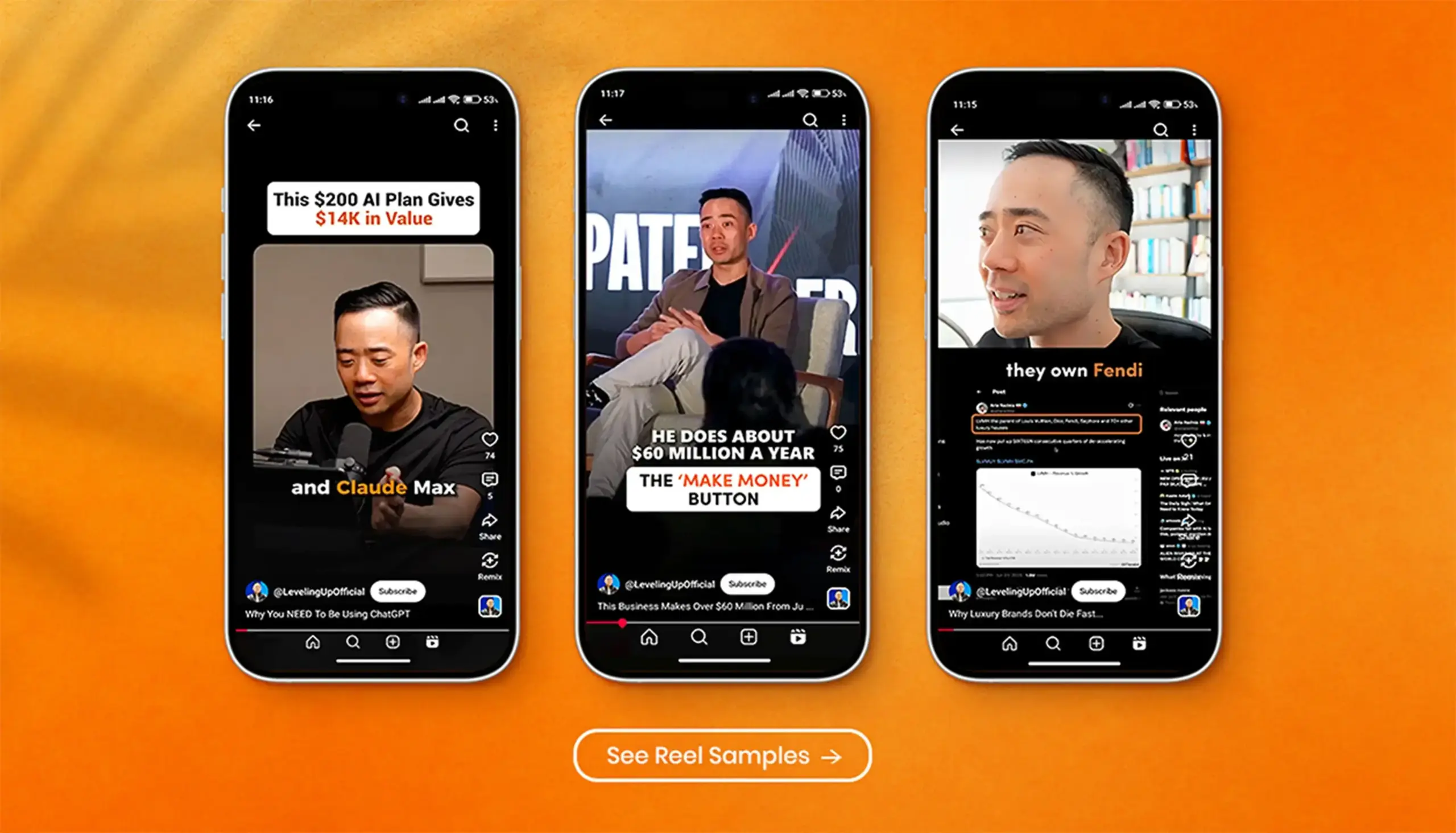
Working with a high-profile podcast brand raises the bar in two directions at once: volume and standards. The channels publish frequently, so the clip pipeline can never become the bottleneck. At the same time, every clip carries the Marketing School and Leveling Up brands in front of a large, marketing-literate audience – viewers who notice weak hooks, sloppy captions, and lazy cuts faster than anyone.
The engagement required a clipping workflow that could keep pace with the shows’ publishing schedules while holding a consistent standard on every cut.
Key Requirements:
- Review each long-form episode and shortlist clip-worthy moments, not random cuts
- Deliver a steady volume of edited Shorts to support daily publishing on two channels
- Hook viewers within the first two seconds of every clip
- Burn in accurate, well-timed captions for sound-off viewing
- Keep framing, caption style, and pacing consistent with each channel's identity
- Maintain fast, reliable turnaround so clips stay close to episode release dates
Requirement
Clipping for a marketing authority is different from clipping for a general-interest show. The moments that perform are not always the loudest ones – they are the contrarian take, the specific number, the tactic explained in one breath. An automated clipper can slice a transcript into segments; it cannot tell which sixty seconds will stop someone who has never heard the show. Finding those moments takes editors who actually follow the subject matter, not just the waveform.
There were also structural challenges. Two channels means two audiences and two content styles: Marketing School is fast, tactical, and news-driven, while Leveling Up runs longer interview conversations with entrepreneurs and operators. A clip selection approach that works for one does not automatically work for the other. And because output is continuous, the process had to avoid the trap most high-volume clipping falls into repetitive formats that train viewers to scroll past.
Key Challenges:
- Identifying genuinely viral-worthy moments inside dense, tactic-heavy marketing conversations
- Adapting clip selection and pacing to two different show formats and audiences
- Holding human editorial quality at the volume automated tools promise but rarely deliver
- Avoiding repetitive clip structures across a high volume of published Shorts
- Competing for attention in the Shorts feed against full-time short-form creators
- Working within an established brand where consistency is non-negotiable
Challenge
Beyond Bracket built a repeatable clipping workflow around the two channels, structured the way we approach every high-volume short-form engagement: systemize the process, then protect the human judgment inside it.
Each episode goes through a moment-mining pass, where editors flag candidate segments the surprising claim, the crisp explanation, the quotable one-liner and test each against one filter: would this stop someone who has never heard of the show? Shortlisted moments are cut vertical, captioned, and finished to each channel’s standard before delivery. That selection call is the part a tool cannot make reliably, and it is where the value sits.
Our Approach:
- Structured moment-mining pass on every long-form episode before any editing begins
- Clip selection filtered for standalone value: each Short must work for a first-time viewer
- Vertical edits with two-second hooks, burned-in captions, and clean 30-to-60-second cuts
- Separate editing profiles for Marketing School and Leveling Up to match each channel's tone
- Batch production workflow to keep a consistent pipeline of ready-to-publish Shorts
- Ongoing feedback loop with the client's team to refine selection and style over time
Solutions
The engagement is ongoing, and the output is public: both channels maintain an active, consistent Shorts presence built from their long-form episodes. Each published clip is an additional entry point into the shows a way for a stranger scrolling the Shorts feed to discover Marketing School or Leveling Up without ever having searched for them.
For the client’s team, the practical win is operational. Clipping runs as a dependable, outsourced function rather than an internal task competing for attention, which is exactly the role the clip economy conversation says it should play.
Key Outcomes:
- Consistent Shorts publishing sustained across both YouTube channels
- Long-form episodes systematically repurposed instead of ending their life at upload
- Every episode multiplied into additional discovery surfaces in the Shorts feed
- Editing quality and brand consistency held at daily-cadence volume
- Clipping established as a reliable outsourced function for the client's content operation
- A repeatable pipeline that scales with the shows' publishing schedules
Final Outcome
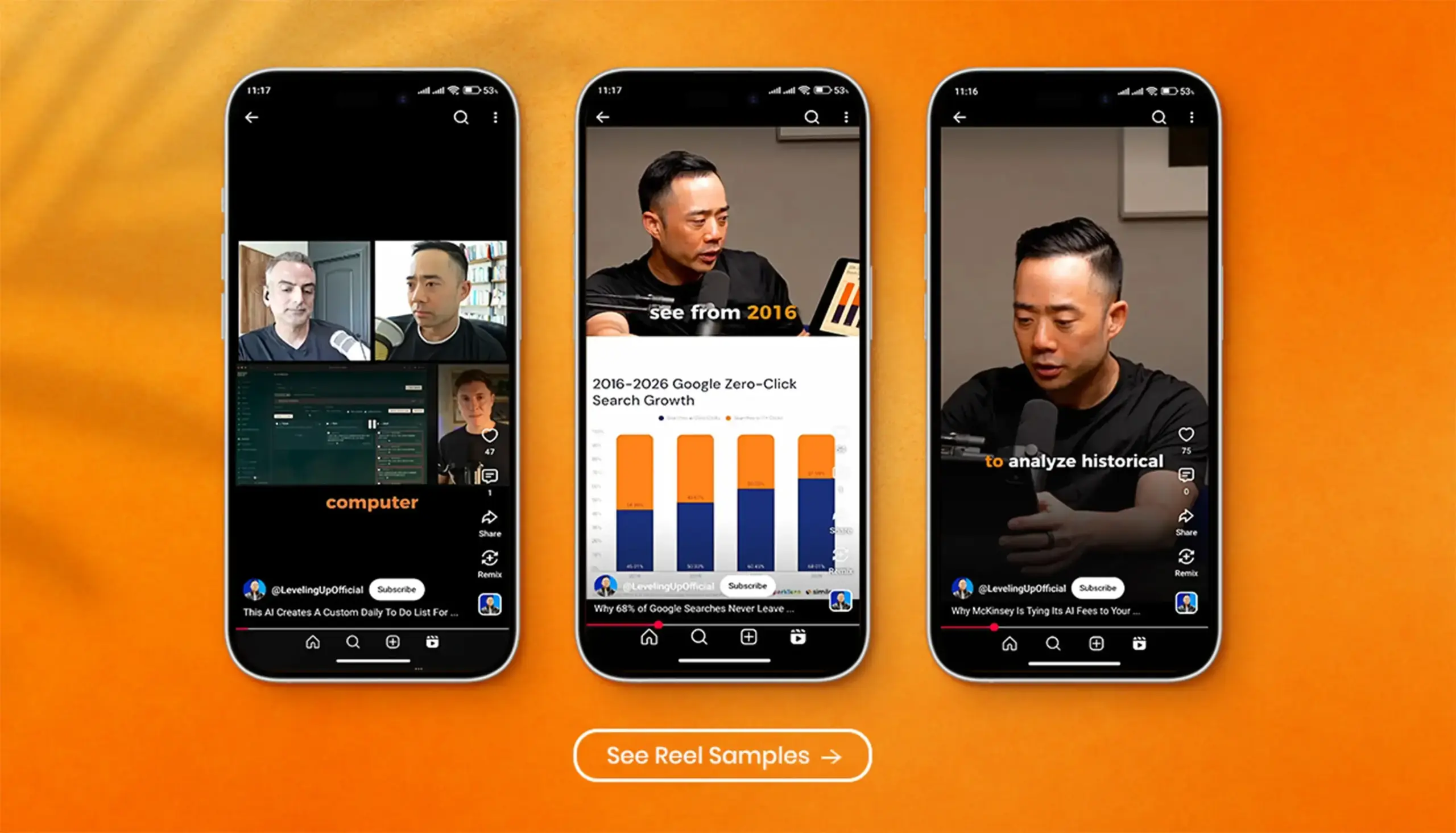

This project shows what clipping looks like when it is treated as a core function rather than an afterthought. A podcast operation with over 100 million downloads still needs someone to systematically mine, cut, and package its best moments and doing that reliably at volume, without losing the human judgment that makes a clip land, is a discipline of its own.
If you publish long-form podcasts, live streams, or YouTube videos, the same leverage is available to you. We wrote a full guide on how clipping works as a repurposing strategy, and our podcast clipping service runs this exact workflow end to end – moments found, clips cut, ready to publish.
Question - Answers
Frequently Asked Questions
What is a podcast clipping service?
A podcast clipping service reviews long-form podcast episodes, selects the strongest standalone moments, and edits them into short vertical videos with captions and fast hooks – ready to publish as YouTube Shorts, Reels, and TikToks. It lets a show reach new audiences without recording anything new.
How do you decide which podcast moments to clip?
Each episode goes through a moment-mining pass. Editors flag candidate segments — a contrarian take, a specific number, a tactic explained in one breath – then test each against one filter: would this stop someone who has never heard the show? Only moments that work for a first-time viewer make the cut.
How many Shorts can you get from one podcast episode?
It depends on episode length and density, but a typical hour-long episode yields several publish-ready Shorts. For high-volume shows, we run a batch workflow that sustains a daily publishing cadence across multiple channels.
Do you use AI to make the clips, or human editors?
Both, in the right order. Tools help with transcription and rough cuts, but a person decides which moments earn a stranger’s attention, writes the hook, times the captions, and matches each clip to the channel’s brand. That editorial judgment is what separates clips that land from bulk auto-generated output.
Which platforms do you edit podcast clips for?
We edit vertical, caption-ready clips for YouTube Shorts, Instagram Reels, and TikTok. Each clip is framed 9:16 with burned-in captions for sound-off viewing and a hook in the first two seconds.
Can you match our channel's existing editing style?
Yes. We build a separate editing profile for each channel – framing, caption style, pacing, and branding – so every clip looks native to the show rather than generic. For Eric Siu, Marketing School and Leveling Up each run on their own profile.
Let's Have A Quick Call
Book a meeting or call us today to discuss your project. Let’s turn your ideas into reality!



Samsuzzaman Riton
Founder & CEO
At Beyond Bracket, our work strategy is highly client-focused. We begin by conducting in-depth client meetings to thoroughly understand their requirements and objectives.