
In Malaysia, ecommerce isn’t just growing, it has become the default way many people discover products, compare prices, and buy. For a lot of businesses, the first “storefront” customers see isn’t a physical shop, but a product listing on a marketplace, a TikTok video, or a mobile checkout page.
That’s why “e-commerce website Malaysia” can mean different things depending on what you’re trying to build. Some brands rely heavily on marketplaces to tap into ready-made traffic. Others build their own ecommerce websites to control branding, customer data, profit margins, and long-term scalability. Most successful businesses end up using a hybrid approach, marketplaces for reach, and a brand-owned store for retention and repeat purchases.
This guide breaks down Malaysia’s ecommerce landscape in practical terms. You’ll find an updated list of the top ecommerce websites and platforms used in Malaysia, plus platform comparisons (Shopify vs WooCommerce vs custom builds), realistic cost ranges in RM, local payment and logistics considerations, legal and compliance basics, and growth strategies through SEO and paid ads.
Malaysia Ecommerce Market Overview
Ecommerce in Malaysia has shifted from a niche online channel into a major part of everyday consumer spending. Increasing internet access, better mobile connectivity, and growing digital payment adoption have all helped online shopping become mainstream across urban and regional locations.
How big is the Malaysia ecommerce market?
According to industry research, Malaysia’s ecommerce market was estimated at USD 10.62 billion in 2025 and is expected to grow to USD 12.18 billion in 2026, with forecasts projecting USD 23.11 billion by 2031 — a 13.67% compound annual growth rate (CAGR) through 2031. (Mordor Intelligence)
These figures reflect a consistent expansion over recent years, driven by increased smartphone use and broader access to online commerce.
Who is shopping online and how?
Malaysians are adopting ecommerce quickly, with marketplaces and retail sites attracting large monthly audiences. Data from ranking tools suggests that leading platforms such as shopee.com.my reach tens of millions of monthly visits, highlighting how central marketplaces are to the online shopping ecosystem. (Semrush)
Why this matters for ecommerce websites in Malaysia
This growth context is crucial for anyone evaluating “e-commerce website Malaysia.” It shows that:
- Market demand is expanding — more people are comfortable purchasing online.
- Mobile and marketplace discovery dominate — users often start on large marketplaces before making buying decisions.
- Opportunity exists for brand-owned ecommerce — as traffic grows, businesses can capture users with their own websites once they understand local behavior.
With a clear view of how big and active the Malaysia ecommerce landscape is, the next step is understanding the top sites where Malaysians are actually shopping online.
If you’re planning to build or scale your own store, explore our ecommerce website development services.
Top 20 Ecommerce Websites in Malaysia (Including Marketplaces)
Malaysia’s ecommerce landscape is marketplace-led. Similarweb’s January 2026 ranking for “Ecommerce & Shopping” in Malaysia lists shopee.com.my (#1), mudah.my (#2), and lazada.com.my (#3) at the top—followed by temu.com (#4) and taobao.com (#5).
That dominance matters because it shapes how Malaysians discover products: search → marketplace → comparison → checkout. Below is a list that reflects that reality, while also including notable brand-owned ecommerce websites.
1) Shopee Malaysia — shopee.com.my
Shopee is the most visited ecommerce website in Malaysia (Jan 2026), which explains why so many product journeys start there—even when the final purchase happens elsewhere. Its UX is built for fast decision-making: dense category browsing, relentless recommendations, and a checkout flow that’s optimized for repeat purchases rather than “one-and-done” shopping.
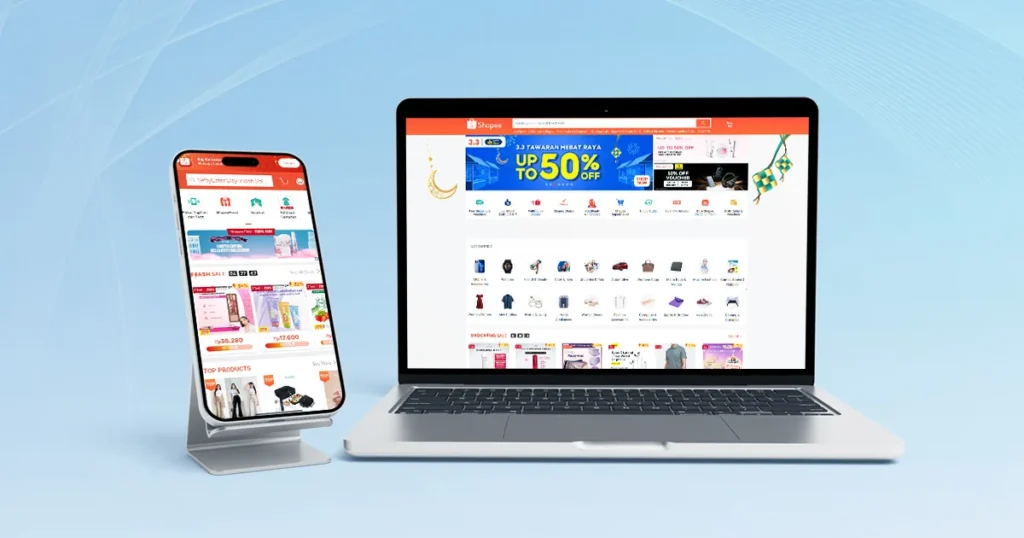
Similarweb engagement signals underline how “shopping-native” the platform is: low bounce rate (24.59%), high pages per visit (7.15), and a long average visit duration (4:54)—all typical of marketplaces where users actively compare options.
Business takeaway: Shopee is reach. But it’s also competition and margin pressure—so brands that scale often pair Shopee with a brand-owned store for retention and customer data ownership.
2) Mudah — mudah.my
Mudah is one of Malaysia’s biggest online destinations for classifieds-style buying and selling, sitting #2 in the country’s Ecommerce & Shopping category (Jan 2026). Unlike checkout-driven marketplaces, Mudah’s core value is matching buyers and sellers across high-intent categories like vehicles, property, jobs, and everyday items.

On its own site, Mudah positions itself as a marketplace used by “millions of unique visitors” to buy and sell across categories like cars, property, phones, and more. Mudah also notes it is part of Carousell Group, connecting it to a broader SEA secondhand ecosystem.
Business takeaway: Mudah is less about “brand storefront” and more about lead generation and listings. If you sell in classifieds-heavy categories, this is where discovery happens.
3) Lazada Malaysia — lazada.com.my
Lazada is one of Southeast Asia’s major ecommerce platforms and emphasizes its technology, logistics, and payments capabilities as its regional backbone. In Malaysia, it ranks #3 for Ecommerce & Shopping websites (Jan 2026), which keeps it firmly in the “top-marketplace” consideration set.

From a behaviour lens, Similarweb shows Lazada Malaysia draws ~7.8M visits, with 4.24 pages/visit and 2:39 avg. visit duration (Jan 2026). That’s consistent with a marketplace experience where users search, filter, compare and purchase within a single session.
Business takeaway: Lazada works well for sellers who want marketplace demand plus a more infrastructure-led ecosystem (logistics/payment narrative), but you still face platform rules, fees, and limited customer ownership—like any marketplace.
4) Temu — temu.com
Temu appears in Malaysia’s top ecommerce traffic mix (ranked #4 in Malaysia’s Ecommerce & Shopping list for Jan 2026). Its appeal is straightforward: wide assortment, bargain positioning, and cross-border convenience—often pulling shoppers who are price-first and willing to wait for delivery.
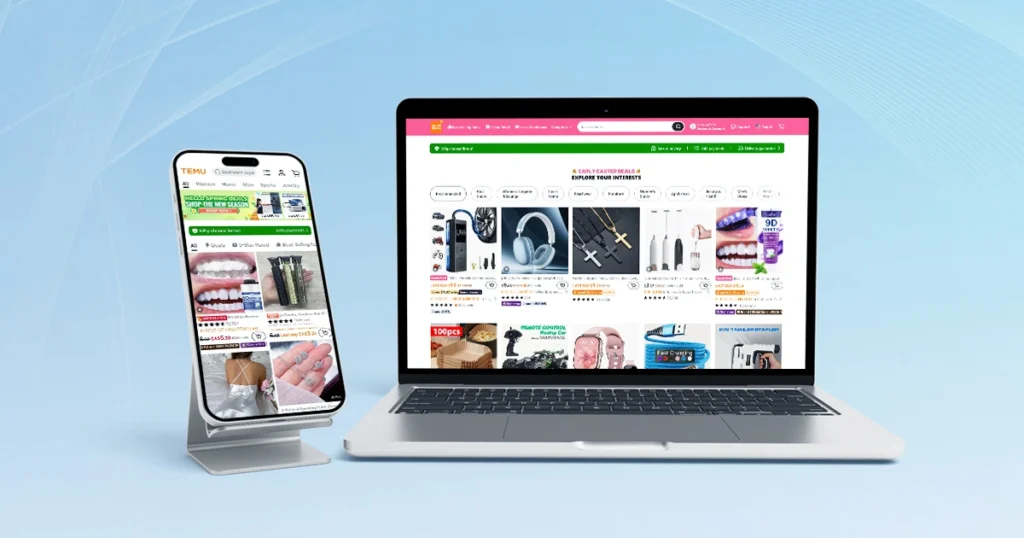
Similarweb shows Temu’s global engagement patterns are strong: 4.70 pages/visit and 4:13 avg. visit duration (Jan 2026).
Business takeaway: Temu is a demand sink for low-to-mid priced items and trend-driven buys. For local sellers, it’s more of a competitive pressure signal than a core channel—unless you’re playing a value-first game.
5) Taobao — taobao.com
Taobao is also part of Malaysia’s top-traffic ecommerce set (ranked #5 in Malaysia’s Ecommerce & Shopping list for Jan 2026). Its strength is breadth and variety—massive catalog discovery with users spending long sessions browsing.
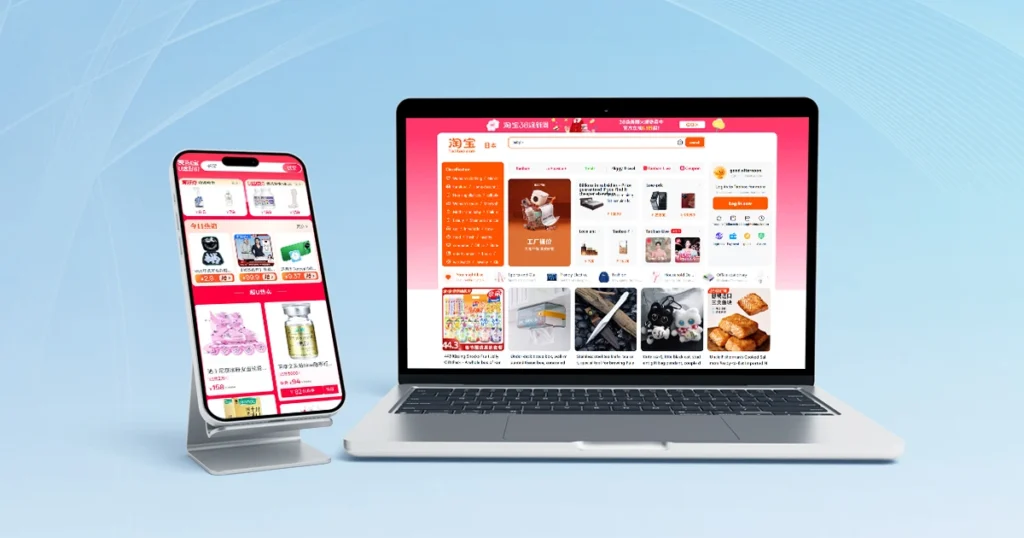
Similarweb engagement for Taobao shows extremely high browsing depth: 10.34 pages/visit and 7:28 avg. visit duration (Jan 2026).
Business takeaway: Taobao is a serious competitor to local sellers on assortment and price. For Malaysian brands, it reinforces the need to differentiate via trust, delivery speed, warranty/returns, and brand experience—advantages marketplaces can’t always match.
6) ZALORA — zalora.com.my
ZALORA positions itself as a fashion-focused ecommerce leader in Southeast Asia and states it was founded in early 2012, operating across markets including Malaysia. The experience is curated: shoppers expect cleaner merchandising, clearer sizing/filters, and a more “retail-like” browsing path than general marketplaces.
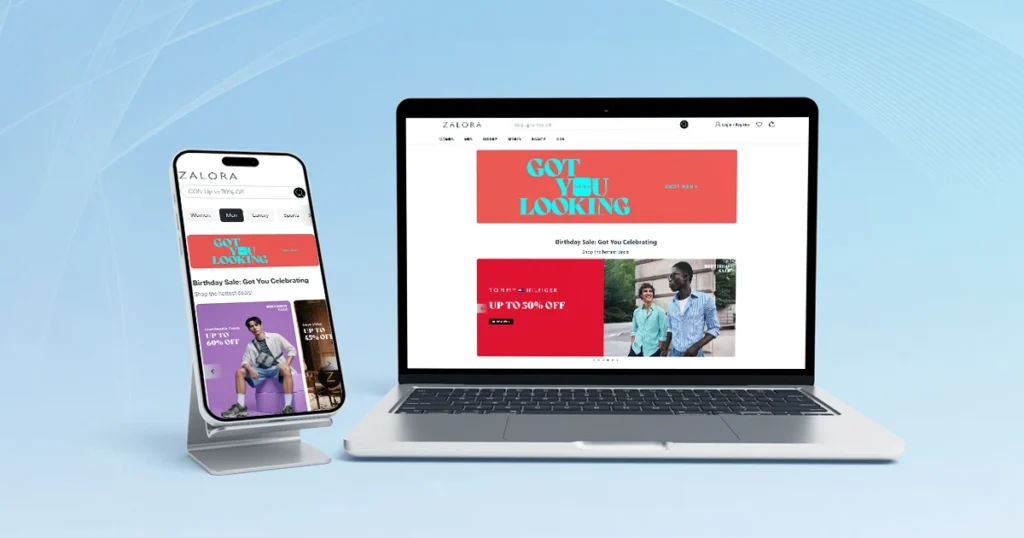
From an ecommerce design lens, vertical players like ZALORA win by minimizing decision fatigue: category structure, editorial-style collections, and product presentation that supports confident buying (especially important in fashion, where returns and fit anxiety are real).
Business takeaway: If you’re in fashion/beauty/lifestyle, ZALORA is a blueprint for what a focused ecommerce experience looks like—strong merchandising beats sheer product volume.
7) Lelong — lelong.com.my
Lelong describes itself as one of the larger ecommerce marketplaces in Malaysia and highlights support for both C2C and B2C transactions across categories like electronics, fashion, watches, cameras, books, and more. That breadth makes it a relevant part of Malaysia’s long-running marketplace ecosystem.
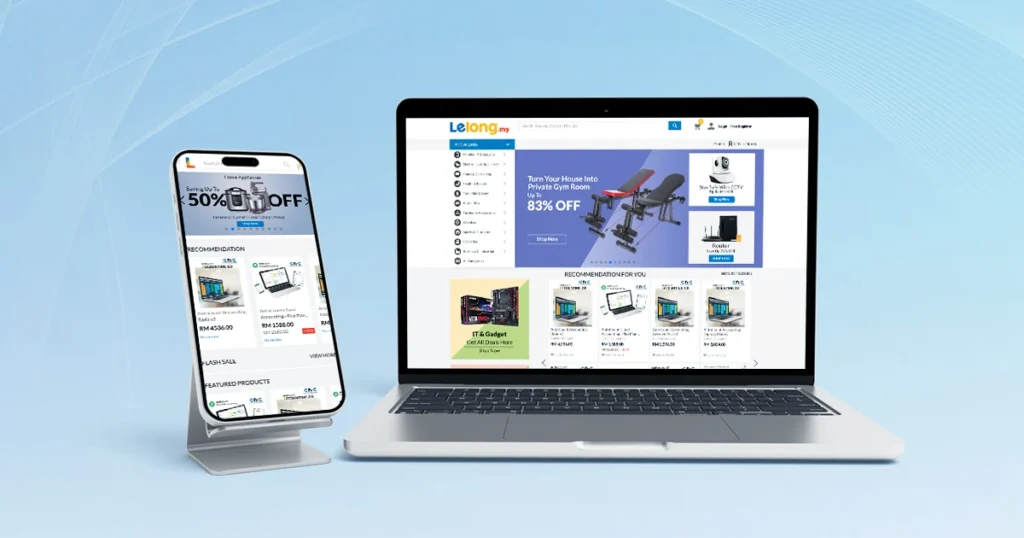
Its value is familiarity: shoppers who grew up with early marketplace patterns still use Lelong-like platforms because they understand how to browse, compare sellers, and hunt deals.
Business takeaway: Lelong isn’t just “another marketplace.” It’s a reminder that in Malaysia, multiple buyer segments coexist—some are TikTok-first, some are Shopee-first, and some still buy through older marketplace behaviours.
8) Carousell (Malaysia) — carousell.com
Carousell Group positions itself as a leading multi-category platform for secondhand in Greater Southeast Asia and says it was founded in August 2012 in Singapore, operating across multiple markets and brands—including Mudah.my.
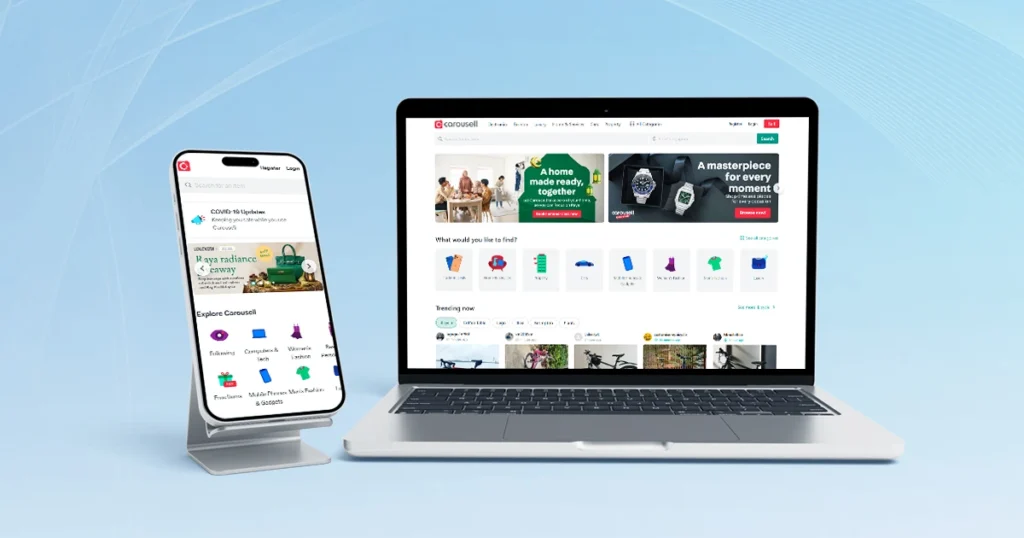
Secondhand platforms win on simplicity: listing, messaging, negotiation, and trust-building. They’re a different ecommerce behaviour than “add to cart”—more conversational, more human, and often local-meetup driven.
Business takeaway: If you sell products that have a strong resale cycle (electronics, furniture, hobby items), secondhand ecosystems influence primary-market demand too—pricing expectations, feature preferences, and what buyers consider “fair value.”
9) PGMall — pgmall.my
PGMall describes itself as a leading homegrown ecommerce platform and states it was founded in 2017, built to support local sellers and serve Malaysian shoppers. The platform angle is “local-first,” which is important in a market where cross-border marketplaces can dominate price perception.

The site emphasizes wide category coverage (multi-category marketplace), which suggests it competes on assortment while leaning into the “support local” narrative to build trust and preference.
Business takeaway: Local marketplaces can be strategically useful for Malaysian brands that want a less crowded alternative to the biggest platforms—especially if the category competition on Shopee/Lazada is brutal.
10) PrestoMall — prestomall.com
PrestoMall’s rebrand story is clear: a 2019 press release states 11street Malaysia rebranded to PrestoMall, describing it as a homegrown online marketplace integrated into the broader Presto ecosystem (including payment services like PrestoPay).

This “ecosystem” approach matters because ecommerce conversion often improves when payments, loyalty, and shopping live closer together—fewer steps, fewer trust breaks, more repeat purchasing triggers.
Business takeaway: PrestoMall is a useful case study in how marketplaces try to differentiate beyond product listings—by layering payments, rewards, and services to keep users inside one loop.
11) Watsons Malaysia — watsons.com.my
Watsons is one of the strongest examples of a brand-owned ecommerce website in Malaysia’s health and beauty space. On Similarweb, watsons.com.my is ranked #1 in Malaysia’s “Beauty and Cosmetics” category (Jan 2026), which signals sustained demand beyond marketplaces—especially for replenishable items like skincare, personal care, and health products.

From a conversion standpoint, Watsons’ ecommerce experience behaves like a promotions-led retail machine: shoppers typically arrive through organic search (Similarweb shows it as the top desktop channel), then move through category browsing, deal pages, and repeat purchase cycles.
Business takeaway: Watsons shows why brands build their own ecommerce website in Malaysia once they have repeatable demand—because ownership of customer journeys and loyalty mechanics matters more than marketplace reach alone.
12) IKEA Malaysia — ikea.com/my/en
IKEA Malaysia is a strong benchmark for high-consideration ecommerce (furniture, home improvement, larger baskets). Unlike marketplaces where users compare dozens of sellers, IKEA’s strength is a tightly controlled brand experience—planning, browsing, and purchasing happens within one ecosystem, with consistent merchandising and product storytelling.

The key lesson here is behavioural: for big-ticket products, users need confidence—dimensions, room fit, delivery clarity, and trust. IKEA’s Malaysia site exists because marketplaces are often not built for that kind of structured “decision journey.”
Business takeaway: If your product requires guidance (size, compatibility, bundles), a brand-owned ecommerce website can outperform marketplaces because you control context, not just price.
13) UNIQLO Malaysia — uniqlo.com/my/en
UNIQLO’s Malaysia ecommerce presence is a good example of how global retail brands localise digital shopping. The brand operates a dedicated Malaysia site experience built around fast product discovery, category clarity, and a frictionless path from browsing to checkout.While marketplaces win on assortment, UNIQLO wins on brand consistency and repeat purchasing—shoppers typically know what they want (or want to browse within a known style language).

Business takeaway: UNIQLO is proof that when the brand itself is the demand engine, building a dedicated ecommerce website in Malaysia becomes a retention and lifetime value play—not only a sales channel.
14) Senheng — senheng.com.my
Senheng positions itself as one of Malaysia’s largest online electrical stores, covering kitchen appliances, home electronics, digital gadgets and more. Its credibility story is also clear: Senheng states it was first established in 1989, growing from a small shop into a nationwide chain.
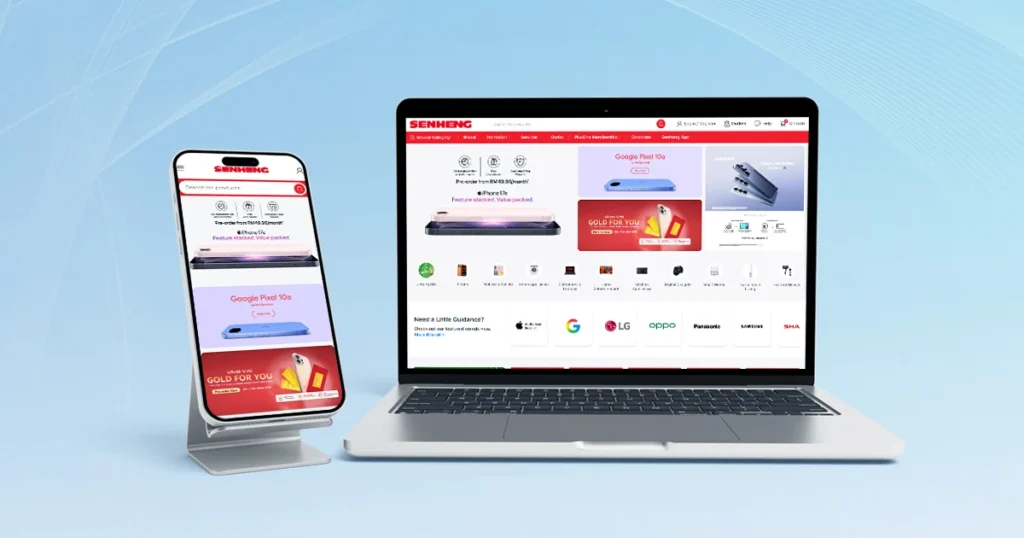
What makes Senheng a useful ecommerce benchmark is the blend of retail trust + online convenience. Their online store benefits from physical presence, warranties, service expectations, and a loyalty-like mechanics (e.g., “S-Coin” cashback described on their site).
Business takeaway: In categories where trust and after-sales support matter (electronics), brand-owned ecommerce websites can win because they reduce risk anxiety—something marketplaces struggle to standardize across sellers.
15) Harvey Norman Malaysia — harveynorman.com.my
Harvey Norman Malaysia runs a full ecommerce storefront spanning electronics, computers, furniture and more—positioned as “online shopping made easy” on its own site. It’s another strong example of a brand store competing in a category where buyers want confidence in authenticity, delivery, and service terms.
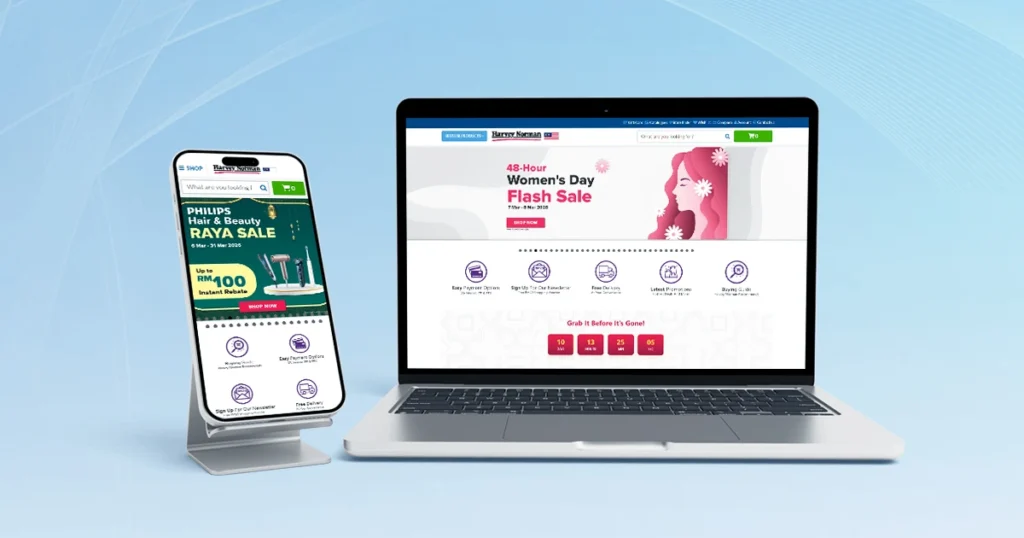
From an ecommerce strategy lens, large-format retailers like Harvey Norman typically use their website to support cross-category basket building (e.g., home + tech) and to maintain control over product presentation and brand trust.
Business takeaway: For established retailers, a dedicated ecommerce website is less about “getting traffic” and more about owning the conversion environment and customer service expectations end-to-end.
16) Mothercare Malaysia — mothercare.com.my
Mothercare Malaysia’s online store focuses on baby, kids, and maternity essentials, and explicitly highlights shopper-friendly commerce mechanics like online & in-store shopping and 14-day returns (visible on the site). In parenting categories, trust and return assurance heavily influence conversion—because purchases are frequent and quality-sensitive.
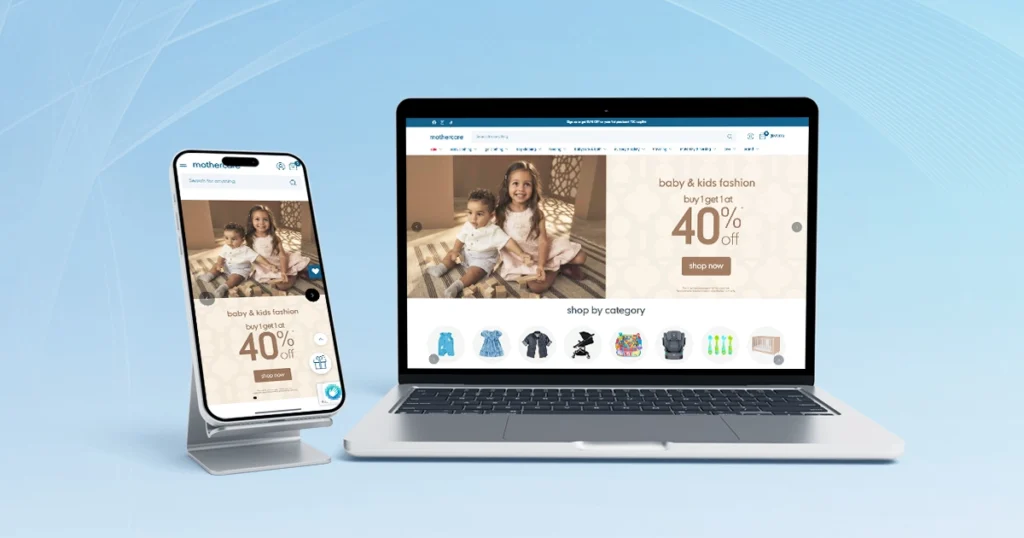
This kind of ecommerce is less about viral discovery and more about reliability: clear category navigation (clothing, feeding, bath, etc.), bundling, and repeat purchases over time.
Business takeaway: Mothercare is a clean example of why vertical brand stores scale well in Malaysia: repeat demand + trust policies + category clarity can outperform marketplace noise.
17) BookXcess — bookxcess.com
BookXcess positions itself as a large online bookstore with a wide selection (the site highlights “more than 100,000 books”). Importantly, it also uses clear commerce incentives—such as free shipping with a minimum spend of RM80 (Peninsular Malaysia only) shown on their site.For ecommerce UX, bookstores are a search-and-browse challenge: users need filters, categories, and fast discovery. BookXcess works as a strong model for catalog-style ecommerce where product variety is high, but the purchase decision is fast once the user finds the right item.
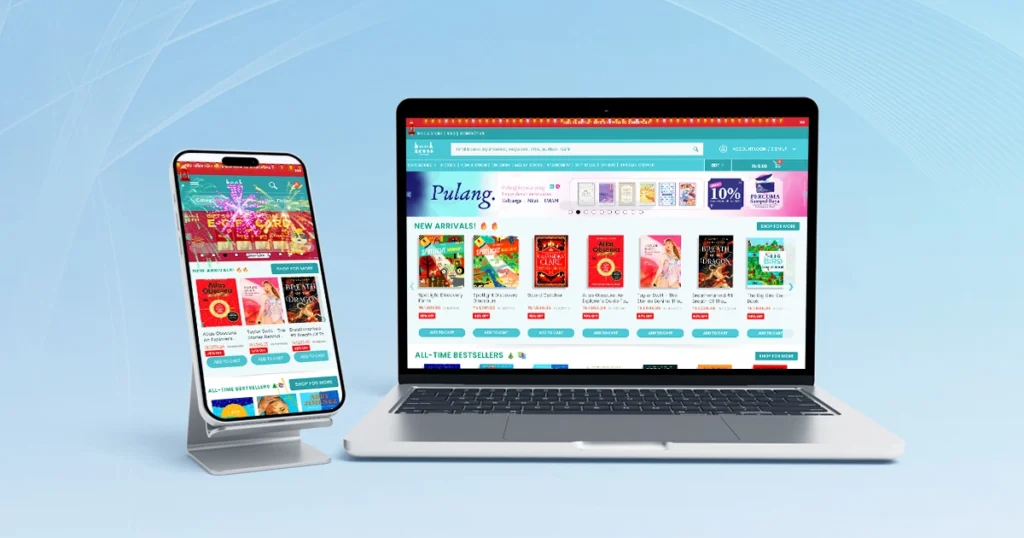
Business takeaway: BookXcess shows how brand-owned ecommerce sites compete on selection + convenience (shipping threshold, browsing structure) rather than competing in marketplace price wars.
18) Signature Market — signaturemarket.co
Signature Market is a well-known Malaysian D2C brand in the “healthy snacks” space. The site positions the brand around making healthy living more accessible and affordable, with frequent promotions (e.g., “20%–50% off” messaging on the storefront).The ecommerce model here is classic D2C: curated product lines, bundles, gifting, and repeat ordering—designed to maximize retention rather than one-time purchases.

Business takeaway: Signature Market is a strong example of why D2C ecommerce websites work in Malaysia: when the brand owns product differentiation, the website becomes the primary profit engine.
19) Al-Ikhsan Sports — al-ikhsan.com
Al-Ikhsan’s site presents itself as Malaysia’s “No. 1 sports retailer” and operates as a multi-brand, multi-category ecommerce store (Nike, Adidas, Puma, etc.), with purchase options like instalments referenced on the storefront.

Sports retail ecommerce typically wins on selection + availability + promotions, but trust still matters (authenticity, returns, delivery). Al-Ikhsan’s brand positioning and direct store experience supports that confidence.
Business takeaway: In competitive retail categories, a strong brand store can outperform marketplaces by pairing product variety with brand trust and structured merchandising.
20) Amazon — amazon.com (cross-border demand signal)
Amazon appears in Similarweb’s Top Marketplace Websites in Malaysia list for January 2026, ranking within the top 5 (behind Shopee, Lazada, Temu, and Taobao). That’s important because it reflects real cross-border browsing and purchasing behaviour among Malaysian consumers—especially in categories where local availability or pricing isn’t competitive.
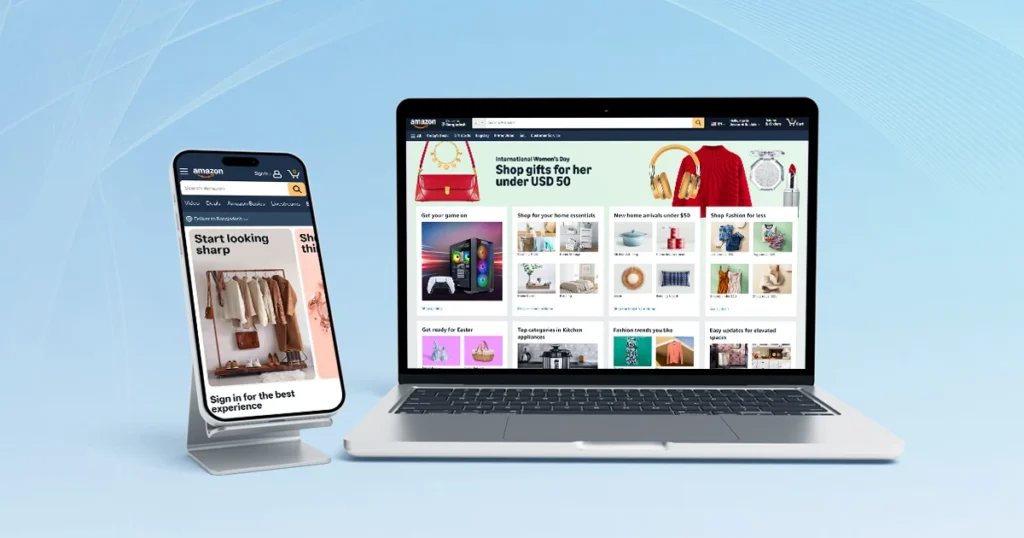
As a market signal, Amazon’s presence reinforces a key strategy point: Malaysian ecommerce isn’t only domestic. Buyers compare options regionally and globally, which increases the pressure on local sellers to compete on speed, trust, warranty/returns, and brand experience—not only price.
Business takeaway: Cross-border marketplaces raise the baseline. The best ecommerce website Malaysia strategies differentiate where marketplaces can’t: reliability, service, and brand-led value.
Explore real ecommerce website case studies to see how brands compete beyond price
Shopify vs WooCommerce vs Custom (Malaysia Context)
Choosing the right ecommerce platform in Malaysia depends on your growth stage, technical capacity, and long-term business goals.
Shopify is a hosted platform with fixed monthly pricing and minimal technical management. It is suitable for SMEs that want a fast launch and predictable infrastructure. (shopify.com)
WooCommerce is an open-source solution built on WordPress. It provides stronger customization and SEO flexibility but requires hosting management and technical maintenance. (woocommerce.com)
Custom ecommerce solutions are built specifically for businesses that require advanced integrations, complex workflows, or enterprise-level scalability.
Instead of comparing them in long text form, the infographic below summarizes their differences in cost structure, scalability, SEO flexibility, and maintenance requirements.
Quick Comparison (Malaysia Context)
| Factor | Shopify | WooCommerce | Custom |
| Hosting Included | Yes | No | Depends |
| Monthly Platform Fee | Yes | No (hosting only) | No |
| Customization | Moderate | High | Very High |
| Maintenance Required | Low | Medium-High | High |
| SEO Flexibility | Good | Excellent | Excellent |
| Scalability | High | High (hosting dependent) | Very High |
The right platform is not about features alone — it’s about operational complexity, marketing strategy, and long-term control.
Get the advantage of custom ecommerce website development instead of relying only on marketplaces. Book a strategy call →.
Best Online Selling Platforms Malaysia (Marketplace vs Own Store)
Most ecommerce journeys in Malaysia begin on marketplaces.
According to Similarweb’s January 2026 rankings, Shopee, Mudah, and Lazada dominate the Ecommerce & Shopping category in Malaysia. (similarweb.com)
Marketplaces provide built-in traffic and simplified setup. However, they operate on commission-based structures and limit control over customer data.
Brand-owned ecommerce websites require marketing investment but offer higher margin potential, branding control, and long-term scalability.
Rather than choosing one over the other, many successful Malaysian brands adopt a hybrid approach — using marketplaces for acquisition and their own website for retention.

The comparison below illustrates how both models differ across traffic access, margin structure, customer data ownership, and scalability.
Cost Breakdown: How Much Does an E-commerce Website Cost in Malaysia? (RM-Based)
One of the most common questions behind the keyword “e-commerce website Malaysia” is cost. The answer depends entirely on what you are building — a simple store, a scalable brand platform, or a fully custom commerce system.
Below is a realistic breakdown based on platform pricing and commonly published development cost references.
1) Shopify-Based Ecommerce Website
Shopify’s official pricing (Malaysia storefront) lists:
- Basic: USD 39/month
- Shopify: USD 105/month
- Advanced: USD 399/month
(shopify.com)
In addition to the subscription:
- Domain cost (annual)
- Theme (free or premium)
- Paid apps (optional)
- Payment gateway transaction fees
While Shopify pricing is in USD, Malaysian businesses should factor in exchange rate fluctuations when estimating monthly operating costs.
Estimated Range (Malaysia Context)
If working with a local agency or freelancer for setup and design:
- Basic setup + customization: typically several thousand RM depending on scope
- Ongoing cost: monthly subscription + transaction fees
This model keeps upfront cost moderate but creates predictable recurring platform expenses.
2) WooCommerce-Based Ecommerce Website
WooCommerce itself is free, but total cost depends on:
- Hosting provider
- Domain
- Premium themes or plugins
- Security & maintenance
WooCommerce’s official pricing guide outlines that costs typically come from hosting, payment processing, and optional premium extensions. (woocommerce.com)
Estimated Range (Malaysia Context)
- Hosting (varies by provider and performance needs)
- Development & setup (RM varies based on customization depth)
- Maintenance (ongoing updates & security management)
WooCommerce often results in lower fixed monthly platform fees than Shopify, but technical responsibility shifts to the business.
3) Custom Ecommerce Solution
Custom ecommerce builds involve:
- UI/UX design
- Backend development
- Database architecture
- API integrations (ERP, warehouse, CRM, payment, etc.)
There is no official “platform fee” because it is built specifically for your business.
Estimated Range (Malaysia Context)
Custom ecommerce development in Malaysia varies significantly depending on scope and integration requirements. Costs increase when:
- Advanced inventory logic is needed
- Multi-vendor or marketplace functionality is required
- B2B pricing layers are involved
- Heavy traffic performance optimization is necessary
This approach has higher upfront cost but no platform subscription dependency.
Get a tailored plan for your ecommerce build with a strategy call.
4) Payment Gateway Fees (Malaysia)
For brand-owned ecommerce stores, payment processing is unavoidable.
For example, Billplz publishes its transaction-based pricing publicly. (billplz.com)
Payment gateways typically charge:
- A percentage per transaction
- Possibly fixed transaction charges
This replaces marketplace commission fees but still affects net margin.
Marketplace vs Own Website Cost Perspective
Marketplace platforms (e.g., Shopee, Lazada) charge commission and transaction fees per sale, as confirmed in seller documentation. (seller.shopee.com.my)
So the cost comparison becomes:
- Marketplace → Lower upfront cost, recurring commission per order
- Own website → Higher marketing investment, lower platform dependency
The “cheapest” solution is rarely the most scalable. The right choice depends on margin structure, product price, and long-term growth strategy.
Payment Gateway Comparison (Malaysia Context)
In Malaysia, payment integration is not just a technical step — it directly impacts conversion rates. Shoppers expect familiar, trusted local payment methods. If those options are missing, cart abandonment increases.
Unlike marketplaces (which handle payments internally), brand-owned ecommerce websites must integrate their own payment gateways.
Below are some of the most commonly used payment solutions in Malaysia, based on official documentation and pricing pages.
Billplz
Billplz is a Malaysia-based payment gateway that supports FPX, DuitNow, cards, and more.
According to its official pricing page, Billplz charges transaction-based fees, with pricing depending on payment method. (billplz.com)
Why businesses use it:
- Local bank integration (FPX)
- Simple onboarding
- Clear pricing transparency
Consideration:
- Fees apply per transaction
- Settlement timing varies by payment method
FPX (Financial Process Exchange)
FPX is Malaysia’s real-time online banking payment system, operated under PayNet.
PayNet describes FPX as a secure online payment gateway that allows customers to complete payments directly via their internet banking accounts. (knowledgebase.paynet.my)
Why it matters:
- Widely trusted
- Direct bank transfers
- High adoption among Malaysian shoppers
For ecommerce websites in Malaysia, offering FPX is often considered essential.
DuitNow
DuitNow enables real-time transfers and QR-based payments across participating banks and eWallets in Malaysia.
PayNet describes DuitNow QR as a unified QR code system that accepts payments from multiple banks and wallets. (paynet.my)
Why it matters:
- Increasingly popular
- Supports QR-based mobile payments
- Convenient for mobile-first users
Stripe (Malaysia Support)
Stripe supports Malaysia and MYR as a currency for payment processing, according to Stripe’s official country support documentation. (stripe.com)
Why businesses use it:
- Developer-friendly APIs
- International expansion support
- Card-focused transactions
See how secure payment gateway integration works in a real ecommerce build in this case study.
Marketplace Payment Model
When selling through Shopee or Lazada, sellers do not manage payment gateways directly. The platform processes payment and deducts fees according to its commission structure, as outlined in Shopee’s seller documentation. (seller.shopee.com.my)
This simplifies operations but reduces control and margin transparency.
Strategic Insight for Malaysia
For brand-owned ecommerce websites in Malaysia:
- FPX is critical
- DuitNow improves mobile conversion
- Cards remain important for higher-ticket purchases
- Gateway selection affects settlement speed and fee structure
Payment flexibility directly influences checkout completion rates.
Malaysia-Specific Logistics Strategy
In Malaysia, logistics is not a backend detail — it directly influences conversion. Delivery speed, shipping cost, and coverage (Peninsular vs East Malaysia) shape buyer decisions, especially when marketplaces have conditioned users to expect fast fulfilment.
For businesses building an ecommerce website in Malaysia, logistics planning must account for carrier rates, delivery zones, and service type.
Pos Malaysia
Pos Malaysia is the national postal and courier service provider. Its official site includes a public rate calculator for domestic and international shipping. (pos.com.my)
Why it matters:
- Nationwide coverage
- Established infrastructure
- Suitable for standard parcel delivery
Pos Malaysia is often used for broad geographic coverage, especially outside major urban hubs.
J&T Express
J&T Express provides domestic parcel delivery across Malaysia, with published shipping rate information available on its official site. (jtexpress.my)
Why businesses use it:
- Competitive domestic pricing
- Strong presence in e-commerce shipments
- Widely integrated with marketplaces
For many SMEs, J&T is a practical choice for everyday ecommerce fulfilment.
Ninja Van Malaysia
Ninja Van operates across Southeast Asia and publishes guidance on rate calculation and delivery coverage for Malaysia. (ninjavan.co)
Its official blog also outlines parcel delivery rate structures by weight for Malaysia (2025). (blog.ninjavan.co)
Why it matters:
- Ecommerce-focused logistics
- Transparent rate structure
- Scalable for growing brands
Explore our ecommerce website development services to integrate logistics like this into your store.
Peninsular vs East Malaysia Cost Consideration
Shipping cost typically varies depending on:
- Weight of parcel
- Destination region
- Delivery speed
Most carriers provide different pricing tiers for West Malaysia (Peninsular) versus East Malaysia (Sabah and Sarawak), as reflected in their official rate calculators and tables. (pos.com.my)
This is important for ecommerce pricing strategy. Free shipping campaigns must account for margin differences between regions.
Marketplace vs Own Website Logistics
When selling on Shopee or Lazada, logistics options are often integrated into the seller dashboard and negotiated at platform scale.
With a brand-owned ecommerce website, you:
- Choose your courier directly
- Negotiate rates based on volume
- Control delivery experience and branding
This increases operational responsibility — but also flexibility.
Strategic Insight
In Malaysia’s ecommerce environment:
- Delivery cost transparency builds trust
- Fast fulfilment improves repeat purchases
- Free shipping thresholds must be calculated carefully
- Regional shipping cost differences impact pricing
Logistics is not just fulfilment — it is part of conversion strategy.
Legal & Compliance
Building an ecommerce website in Malaysia is not only a technical or marketing exercise. It also requires compliance with local business registration, tax obligations, and data protection laws.
Ignoring these elements can create operational and legal risks as the business scales.
Business Registration (SSM)
In Malaysia, businesses are required to register with the Companies Commission of Malaysia (Suruhanjaya Syarikat Malaysia, SSM).
Operating an ecommerce website without proper registration can expose the business to penalties and regulatory complications. Registration type depends on structure (sole proprietorship, partnership, or private limited company).
While marketplaces may not always verify incorporation in early stages, brand-owned ecommerce websites that scale usually formalize their registration early to enable:
- Payment gateway approval
- Business bank accounts
- Tax registration
- Corporate partnerships
Sales & Service Tax (SST)
Malaysia’s indirect tax framework includes Sales Tax and Service Tax (SST).
According to the Royal Malaysian Customs Department (MySST portal), businesses exceeding the prescribed threshold (commonly cited at RM 500,000 taxable turnover depending on category) may be required to register for SST. (mysst.customs.gov.my)
For ecommerce operators, this affects:
- Pricing structure
- Invoice formatting
- Tax reporting obligations
Businesses should confirm whether their product category triggers SST registration requirements.
Personal Data Protection Act (PDPA)
Malaysia’s Personal Data Protection Act 2010 (Act 709) governs how businesses collect, store, and process personal data.
The official Personal Data Protection Department (PDP) outlines obligations regarding consent, disclosure, and security of personal data. (pdp.gov.my)
For ecommerce websites, this means:
- Clear privacy policies
- Secure storage of customer information
- Responsible handling of payment and contact data
Failure to comply can lead to enforcement action and reputational damage.
Consumer Protection & Returns
Ecommerce businesses must also ensure transparent terms regarding:
- Refunds
- Returns
- Delivery timelines
- Product accuracy
Clear policies reduce disputes and increase trust — especially important for brand-owned ecommerce websites competing against marketplace ecosystems that already have structured buyer protection programs.
Strategic Insight
Compliance is often overlooked in early ecommerce setup, but in Malaysia it becomes critical as revenue grows.
A legally structured ecommerce website enables:
- Seamless payment gateway integration
- Proper tax handling
- Stronger corporate credibility
- Long-term scalability
Legal compliance is not just about avoiding penalties — it builds operational stability.
How can I promote my ecommerce website in Malaysia?
You can promote your ecommerce website in Malaysia through a combination of search engine optimization (SEO), marketplace presence, and paid advertising.
SEO helps your site rank for transactional keywords in Google. Marketplaces like Shopee and Lazada can drive product discovery and early traction. Paid ads on Meta, Google Shopping, or TikTok can accelerate traffic and retarget visitors.
For long-term growth, many Malaysian brands use marketplaces for demand capture and their own website for brand retention and higher margins.
Is SEO important for ecommerce in Malaysia?
Yes. SEO is especially important for brand-owned ecommerce websites.
Marketplaces already dominate high-volume keywords, but independent ecommerce sites can rank for:
Product-specific keywords
Category-based searches
Bahasa Malaysia queries
Long-tail commercial terms
Optimizing product pages, category structure, and site speed improves organic visibility and reduces reliance on paid traffic.
Can I start ecommerce in Malaysia without a physical store?
Yes, you can operate an ecommerce business in Malaysia without a physical retail outlet.
However, you must register your business with the Companies Commission of Malaysia (SSM) and comply with applicable tax and data protection laws, including SST registration (if required) and PDPA obligations.
Many successful ecommerce brands in Malaysia operate fully online, using warehouses or third-party logistics instead of physical storefronts.
What is the best ecommerce solution in Malaysia for long-term growth?
The best ecommerce solution in Malaysia depends on your growth stage.
Shopify is suitable for fast deployment and operational simplicity.
WooCommerce offers stronger flexibility and SEO control.
Custom ecommerce solutions are ideal for businesses requiring advanced integrations or enterprise-level scalability.
Long-term growth typically involves owning customer data, controlling branding, and reducing dependency on marketplace commissions.
What is the best online shop in Malaysia?
There is no single “best” online shop in Malaysia because different platforms serve different purposes.
Shopee and Lazada lead in overall traffic and marketplace reach. However, many brand-owned ecommerce websites outperform marketplaces in customer loyalty, niche specialization, and repeat purchase rates.
The best platform ultimately depends on whether your priority is traffic volume, brand control, margin optimization, or long-term scalability.
Conclusion
Ecommerce in Malaysia is no longer defined by a single platform. It is an ecosystem.
Marketplaces such as Shopee and Lazada dominate discovery and traffic, making them powerful entry points for sellers who want immediate exposure. At the same time, brand-owned ecommerce websites are becoming increasingly important for businesses that want higher margins, stronger customer relationships, and long-term scalability.
Choosing the right ecommerce website in Malaysia is not about following trends. It requires understanding:
- Where Malaysian shoppers browse
- How they prefer to pay
- What delivery experience they expect
- What legal and tax obligations apply
- And how your business plans to grow over the next few years
For some businesses, a marketplace-first strategy makes sense. For others, building a Shopify or WooCommerce store is the smarter move. For larger or more complex operations, a custom ecommerce solution may provide the flexibility required to scale.
The most resilient ecommerce brands in Malaysia typically adopt a hybrid approach — leveraging marketplace traffic for acquisition while building their own ecommerce infrastructure for retention and brand control.
In a market that continues to expand year after year, the opportunity is clear. The advantage goes to businesses that choose their platform strategically, understand local payment and logistics realities, and build with long-term growth in mind.